The Best Fluffy Pancakes recipe you will fall in love with. Full of tips and tricks to help you make the best pancakes.
Authentic Italian Sponge Cake (Pan di Spagna)
If you want to master the art of Italian pastry, you must first master the foundation: the Italian Sponge Cake, known natively as Pan di Spagna. Unlike a heavy American Yellow Cake or a dense pound cake, this classic European base is incredibly light, airy, and bouncy. It is the absolute essential building block for almost all traditional Italian layer cakes, from a fruit-filled Chantilly cake to a coffee-soaked Classic Tiramisu. The most surprising part? This masterpiece of baking requires absolutely zero chemical leavening agents—no baking powder and no baking soda!

What is it
Pan di Spagna translates literally to “Bread of Spain”, named after the Spanish chef who invented it in the 1700s. It is a classic European genoise-style sponge cake made using only three base ingredients: eggs, sugar, and flour. Because there is no baking powder, no butter, and no oil, the cake relies entirely on the mechanical aeration of the eggs to rise. By vigorously whipping the eggs and sugar together until they triple in volume, you create millions of tiny air bubbles. When baked, these bubbles expand, creating a tall, cloud-like sponge structure that acts like a culinary sponge—perfectly designed to soak up sweet syrups without falling apart.
Why you’ll love it
- Only 3 Ingredients: You likely have eggs, sugar, and flour in your kitchen right now.
- No Baking Powder: It gets 100% of its lift naturally from whipped eggs.
- The Perfect “Soaker”: Because it contains no added fat (butter or oil), the crumb is dry and structured. This means it can absorb huge amounts of coffee, rum, or fruit syrup without turning into mush.
- Highly Versatile: It is a blank canvas! Eat it plain with powdered sugar, or slice it to make a towering Strawberry Cheesecake Trifle.
Ingredients
Precision is key in European baking. Using a kitchen scale to weigh your ingredients is highly recommended for the best results.
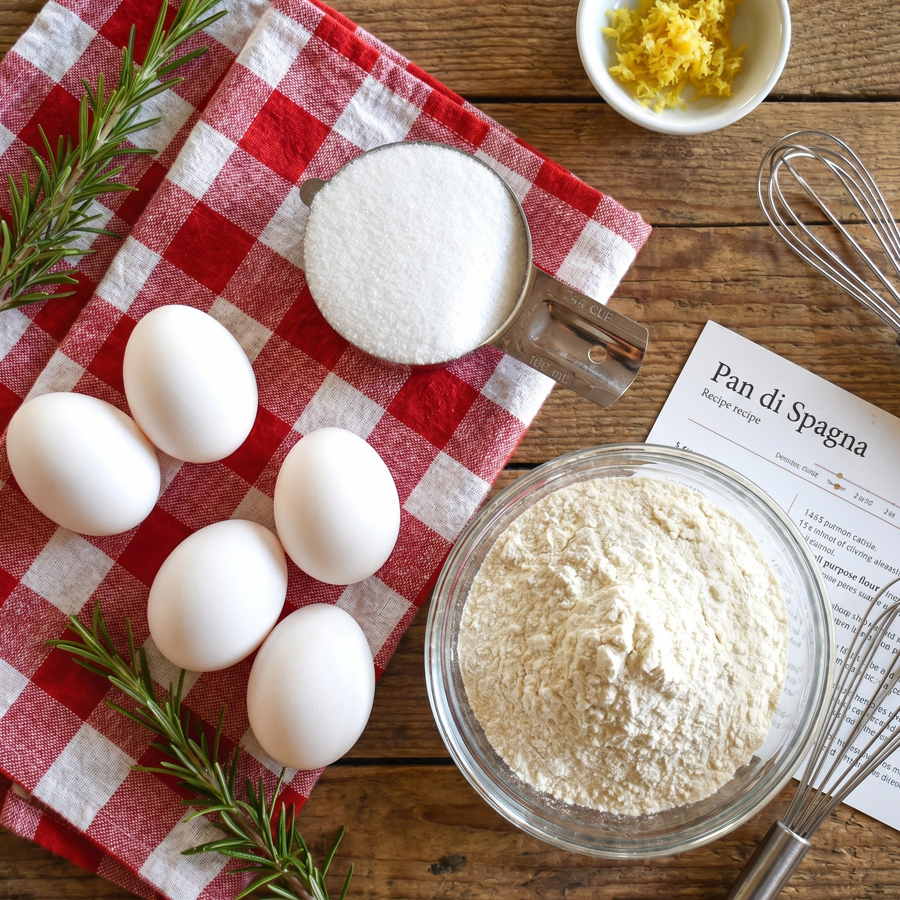
- 5 Large Eggs: They must be at room temperature! Cold eggs will not whip up to their full volume.
- 150g (¾ Cup) Granulated Sugar.
- 75g (½ Cup + 1 Tbsp) Type 00 Flour or Cake Flour: Do not use all-purpose flour. You need a low-protein flour to keep the cake tender.
- 75g (½ Cup) Potato Starch or Cornstarch: Mixing starch with the flour is the Italian secret to a feathery, melt-in-your-mouth crumb.
- Flavoring (Optional): 1 tsp pure vanilla extract or the freshly grated zest of 1 lemon.
- A tiny pinch of salt.
(Note: Traditional Pan di Spagna contains absolutely no butter, oil, or milk!)
How to make
- Prep: Preheat your oven to 320°F (160°C) static/conventional, or 300°F (150°C) fan-forced. Lightly grease and flour an 8-inch or 9-inch round springform pan. Do not line the sides with parchment, as the batter needs to grip the sides of the pan to climb.
- Whip the Eggs: Break the room-temperature eggs into the bowl of a stand mixer. Add the sugar, salt, and vanilla/lemon zest.
- The Ribbon Stage: Beat the mixture on medium-high speed for a full 15 to 20 minutes. This is crucial! The mixture should become pale yellow, extremely frothy, and triple in volume. When you lift the whisk, the batter falling off should leave a “ribbon” or a visible trail on the surface for a few seconds before sinking back in.
- Sift and Fold: Sift the flour and potato starch together. Take a fine-mesh sieve and sift 1/3 of the flour mixture directly over the whipped eggs. Using a silicone spatula, gently fold the flour in using an upward, scooping motion. Do not stir! Stirring will deflate the air bubbles. Repeat in two more additions until no white streaks remain.
- Bake: Gently pour the batter into your prepared pan. Do not tap the pan on the counter, as this will pop the air bubbles! Use a spatula to level the top.
- Patience: Bake for 40-50 minutes. DO NOT open the oven door for the first 35 minutes, or the sudden drop in temperature will cause your cake to collapse in the middle.
- Cool: Once a toothpick comes out clean, turn off the oven. Leave the cake in the oven with the door slightly ajar for 10 minutes to cool gradually, then remove and cool completely on a wire rack.
How To Serve
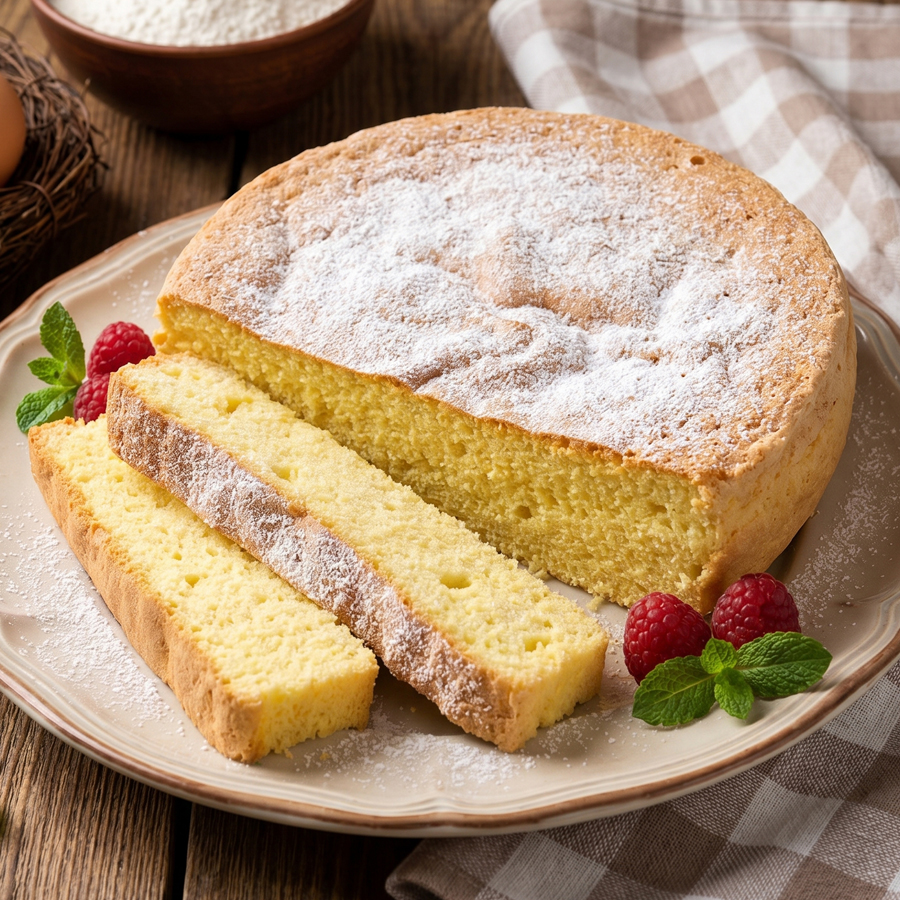
If you want to enjoy it the simple, traditional Italian way, simply dust the completely cooled cake with powdered sugar and serve it plain with a cup of espresso or tea for breakfast. However, Pan di Spagna truly shines when used as a layer cake. Use a serrated knife to cut it horizontally into 2 or 3 layers. Brush the dry layers generously with a simple syrup (or liqueur), then fill them with a classic Italian Buttercream, fresh pastry cream, or a rich Chocolate Mousse Cake filling. It is also the traditional base used under a smooth, poured Chocolate Ganache for a polished finish.
How To Store
- Room Temperature: Wrap the completely cooled, unfrosted sponge cake tightly in plastic wrap. It will stay soft at room temperature for up to 2-3 days.
- Refrigerator: Only refrigerate the cake if it has been filled with a perishable cream or fresh fruit. Pan di Spagna actually slices much easier if you wrap it and chill it in the fridge overnight before cutting it into layers!
- Freezer: This sponge freezes beautifully. Wrap the bare cake in two layers of plastic wrap and freeze for up to 1 month. Thaw at room temperature before soaking and frosting.
FAQs
Why did my sponge cake collapse and sink in the middle?
This is the most common issue, and it happens for two reasons: either you opened the oven door too early while baking, or you did not whip the eggs and sugar long enough (you must hit that 15-minute “ribbon stage”).
Why is my cake dense and rubbery?
If your cake is dense, you either used all-purpose flour (which has too much gluten) or you folded the flour into the eggs too aggressively, which popped all the delicate air bubbles you spent 20 minutes whipping into the batter.
Do I really need to use potato starch?
Yes! Replacing half of the flour with potato starch (or cornstarch) is the secret to getting a cake that is light, feathery, and easy to chew. Using 100% flour makes the crumb heavier and bread-like.
Note
Do not line the sides of your baking pan with parchment paper or heavy butter. The batter is basically an egg soufflé; it needs to literally grip the bare, slightly floured sides of the pan in order to climb up and rise tall in the oven!
Nutrition information
(Estimates based on 1 slice, assuming 8 slices total)
- Calories: 145 kcal
- Carbohydrates: 26 g
- Sugars: 19 g
- Protein: 4 g
- Fat: 3 g
Tips and Tricks
- The Warm Egg Trick: If your kitchen is very cold, set your whole, uncracked eggs in a bowl of warm tap water for 10 minutes before using. Warm eggs whip up significantly faster and much fluffier than cold eggs.
- Sift Twice: For the absolute lightest texture, sift your flour and cornstarch together in a separate bowl first, and then sift it again over the egg mixture when folding.
- Always Soak: Pan di Spagna is designed to be slightly dry so it can absorb moisture. Always brush the layers with a simple syrup, milk, or liqueur before filling it!